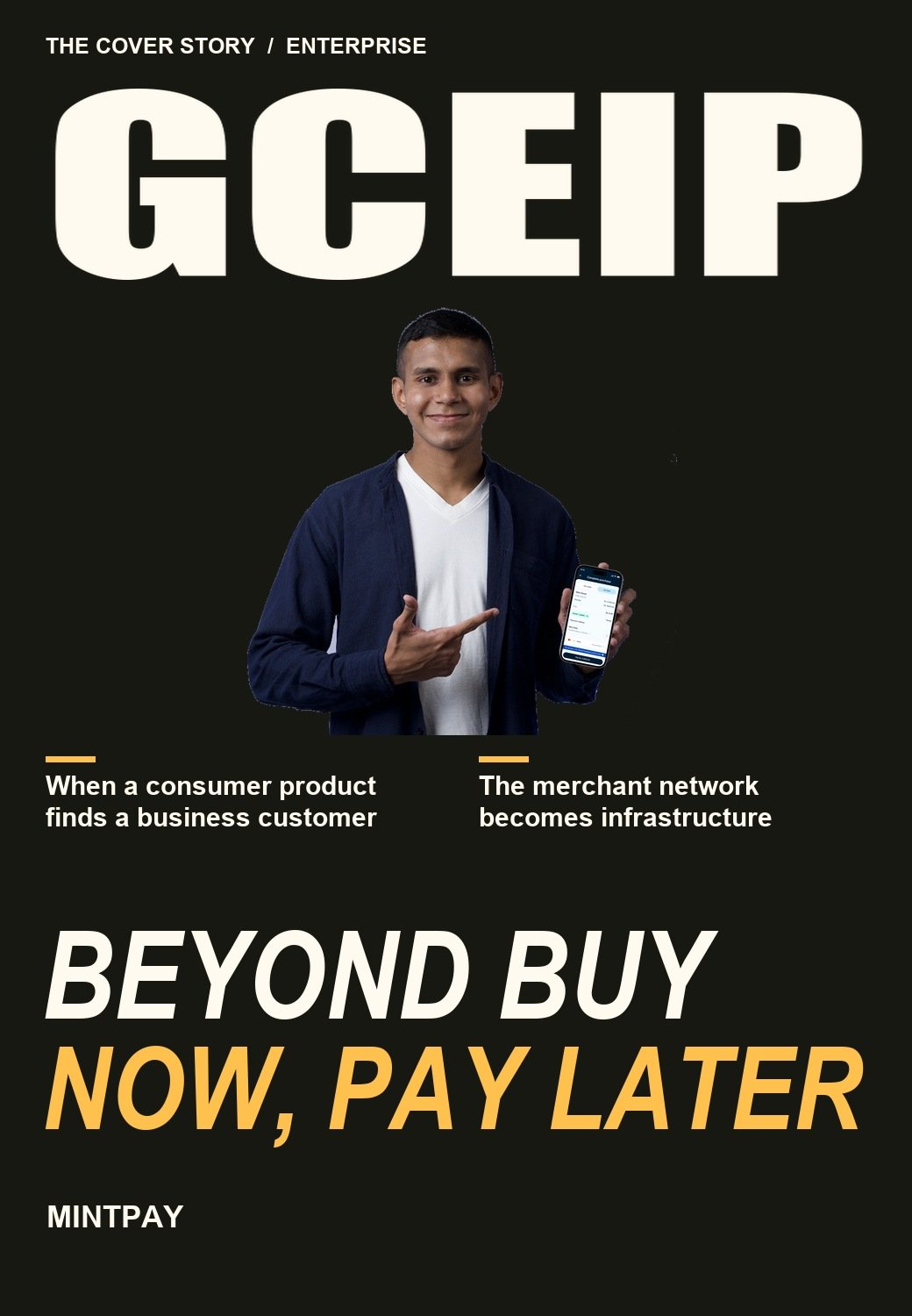
Sri Lankan payments company Mintpay is extending its consumer network into corporate vouchers, testing a new business channel for its merchant relationships.
M
MintpayPayments / corporate employee benefits · Sri Lanka
GCEIP Editorial Desk ·
Editorial. Published by the GCEIP editorial desk under our editorial policy. An editorial story does not make its subject an award recipient.
Quick ReadHighlights from this page⌃
Sri Lankan payments company Mintpay is extending its consumer network into corporate vouchers, testing a new business channel for its merchant relationships.
Many financial-technology startups begin by making a consumer checkout experience easier. The harder challenge is building a business that remains useful when the novelty of that first feature wears off. Sri Lanka’s Mintpay developed around buy-now-pay-later and payment technology, but its 2026 corporate-voucher launch points to a new route to market. The company is seeking to help employers and other organisations distribute spending value across its merchant network. That is a different procurement decision with different expectations of reliability, controls and reporting.
The merchant network becomes infrastructure
A payment company's relationship with shops, restaurants and other merchants is not valuable solely because customers can pay through its app. It can also support new services if the network is broad enough and the experience is dependable. Mintpay's corporate-voucher product allows organisations to purchase vouchers for employees or recipients, with an emphasis on flexible use. The launch report says recipients can convert vouchers into Mint Coins that do not expire. Launch reporting in 2026 described an offer usable across more than 2,500 partner merchants in over 25 categories. Mintpay's own current voucher pages display a higher merchant-network figure; figures reported at different times should not be conflated or represented as a directly verified growth rate.
A more complicated customer relationship
An employee reward or client gift seems simple until the recipients try to redeem it. The organisation wants straightforward purchasing and distribution, finance teams need accurate invoicing and the recipient wants convenient spending. If restrictions are hidden, if merchants cannot recognise the voucher or if customer support is slow, the product can damage the employer's relationship with its own people. Mintpay therefore has to extend its payment infrastructure into a service operation. The product's appeal lies as much in the breadth and usability of its network as in its technology.
Selling to corporate buyers
Corporate vouchers can give Mintpay access to companies rather than only individual consumers. They may also send customers to merchants who would otherwise be difficult to reach. But this does not automatically mean incremental economic value. Redemption patterns, breakage, merchant settlement times, fraud prevention and customer-acquisition costs all influence sustainability. The company will need to publish clear terms and demonstrate that both corporate buyers and end users understand the offer. Transparent handling of any unused voucher balance is especially important when products are marketed as flexible and long-lasting.
The Sri Lankan context
Consumer purchasing power and business spending discipline make the market demanding. Employers need to justify discretionary benefits, while merchants need predictable settlement. The advantage of a strong local network is that it reflects actual shopping behaviour and established commercial relationships. The challenge is that a new corporate product must work across many different merchants without confusing recipients. Building trust will require consistent execution rather than ambitious merchant-count announcements.
GCEIP Analysis
Mintpay's move from individual checkout to employer-facing distribution is a recognizable enterprise transformation. The business is testing whether its consumer payments network can support an additional product and revenue channel. The launch and available merchant figures establish a credible starting point, but the scale of corporate adoption, voucher redemption and customer satisfaction has not been independently verified. Those measures will determine whether the service becomes a durable business line.
GCEIP View
Mintpay's story is about using existing financial infrastructure in a new way. Corporate buyers need distribution and redemption to work consistently across that network. If Mintpay makes business gifting and employee benefits simple, transparent and dependable, its 2026 expansion could give it a recurring business with employers.
Key facts
What is Mintpay?
Mintpay is a Sri Lanka-based payments and merchant-network company offering consumer payments and vouchers.
What did Mintpay introduce in 2026?
Mintpay introduced corporate vouchers intended for use at participating Sri Lankan merchants.
If this story is about you or your company, you are welcome to link to it. Copy either snippet below into your website, press page, email signature or post.
About this feature
This is a GCEIP editorial feature. Publication does not confer nomination, finalist, winner or honouree status.
From performance-focused electric motorbikes to affordable family transportation, Dat Bike is taking on one of Southeast Asia's most established consumer habits. Its next challenge is not simply building a better electric motorcycle, but building a manufacturing and service business capable of competing at national and eventually regional scale.
Construction projects can run into trouble long before building work starts. Stockholm-based Brickanta is developing an AI-powered platform to help construction companies analyse contracts, identify risks, prepare bids and make better decisions before committing resources.
From flexible warehouse capacity to connected transportation networks, Riyadh-based Sirdab is attempting to transform one of the most important—and least visible—parts of Saudi Arabia's growing business economy.