Dat Bike: How Vietnam's Electric Motorcycle Challenger Is Going Mainstream
From performance-focused electric motorbikes to affordable family transportation, Dat Bike is taking on one of Southeast Asia's most established consumer habits. Its next challenge is not simply building a better electric motorcycle, but building a manufacturing and service business capable of competing at national and eventually regional scale.
DB
Dat BikeElectric mobility · Vietnam · B2C
The Cover Story editorial team ·
Vietnam has been built around the motorcycle.
The most successful innovation often changes the technology more than it asks customers to change their behaviour.
For millions of people, two wheels are not a recreational choice. They are how people commute to work, take children to school, visit markets, transport goods and navigate crowded cities.
A motorcycle needs to work every day.
It needs to be affordable, reliable, practical and convenient to maintain.
For decades, petrol-powered motorcycles have met those requirements.
So when a Vietnamese technology entrepreneur decided to build a company around electric motorcycles, he was not simply entering a new vehicle category.
He was challenging an established way of life.
That entrepreneur was Nguyen Ba Canh Son, founder and CEO of Dat Bike.
Established in 2019, Dat Bike began with an ambitious proposition: electric motorcycles should be capable of competing with petrol-powered vehicles on the things that matter to riders.
Power. Range. Convenience. Reliability.
But in 2026, the company has reached a different stage.
Its new ERA range targets ordinary Vietnamese households, while investments in manufacturing, retail distribution, after-sales service and technology partnerships are intended to help the business expand beyond its early customers.
Dat Bike's next transformation is about moving from proving electric motorcycles can work to making them a mainstream consumer choice.
A Vietnamese Engineer Takes on an Established Industry
Nguyen Ba Canh Son's entrepreneurial journey began with a decision to leave a software engineering career in Silicon Valley and return to Vietnam.
His observation was straightforward.
Electric cars were attracting global attention, but in Vietnam, motorcycles remained far more central to everyday transportation.
The opportunity was enormous.
So was the difficulty.
Consumers already had access to affordable, dependable petrol-powered motorcycles from established manufacturers.
For an electric alternative to succeed, environmental benefits alone would not necessarily be persuasive.
The vehicle had to compete on performance and practicality.
Dat Bike therefore focused on developing electric motorcycles suited to the realities of the Vietnamese market.
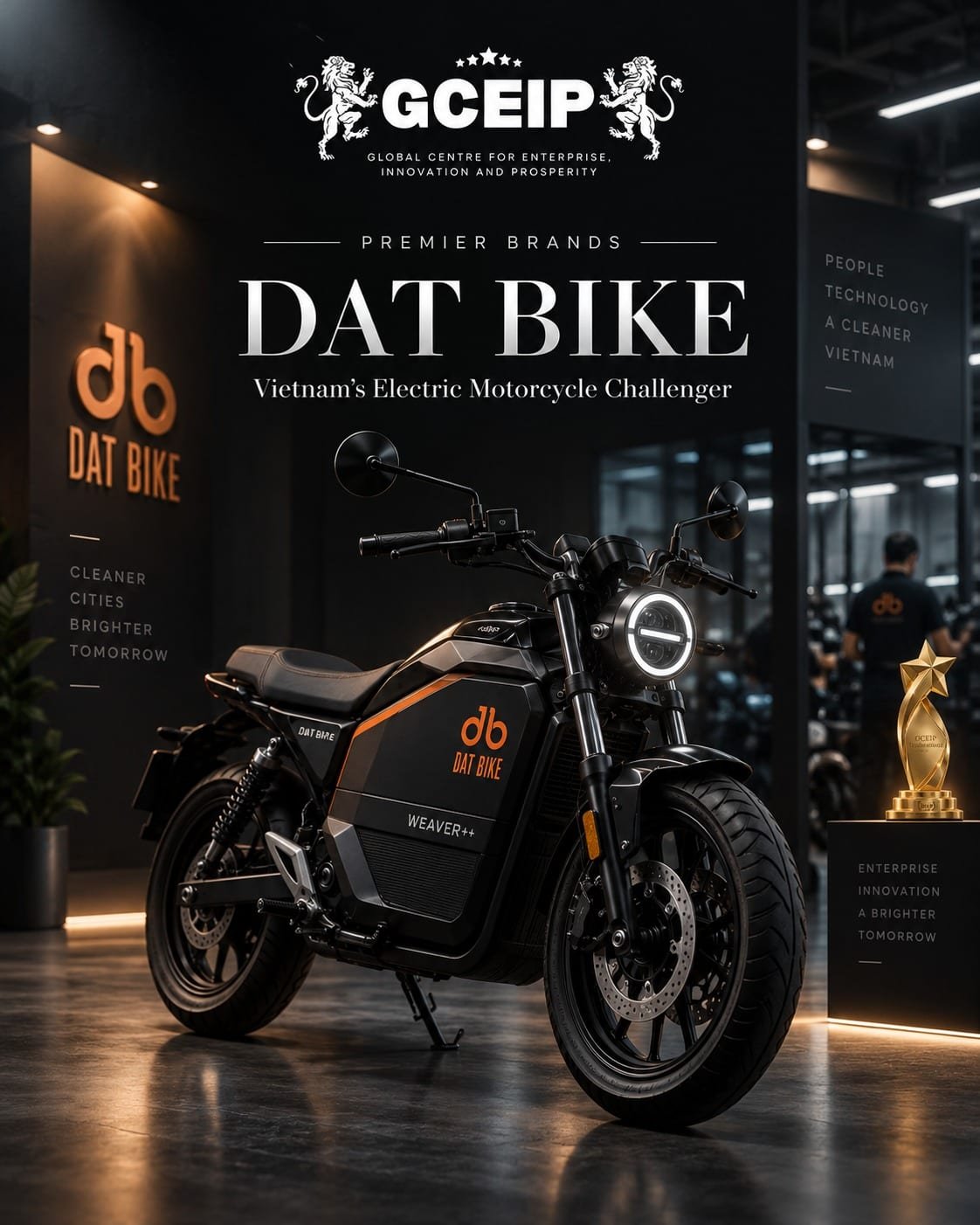
Its early Weaver models helped establish the company's engineering approach and gave it an initial position among riders interested in electric technology.
But developing a technically capable vehicle was only the beginning.
Manufacturing motorcycles requires skills far beyond software development.
Battery management, motor performance, electronic controls, component sourcing, assembly, testing and quality assurance all become essential parts of the business.
For a startup competing against experienced international manufacturers, these capabilities cannot be built overnight.
Dat Bike chose to invest in developing more of that engineering knowledge within its own organisation.
That decision has become central to its identity.
The First Challenge: Making Electric Feel Like a Real Motorcycle
For consumers accustomed to petrol motorcycles, switching to electric involves several practical questions.
Will the vehicle travel far enough?
How quickly can it charge?
Can it carry passengers and everyday belongings?
What happens when it needs maintenance?
And will it remain dependable after years of regular use?
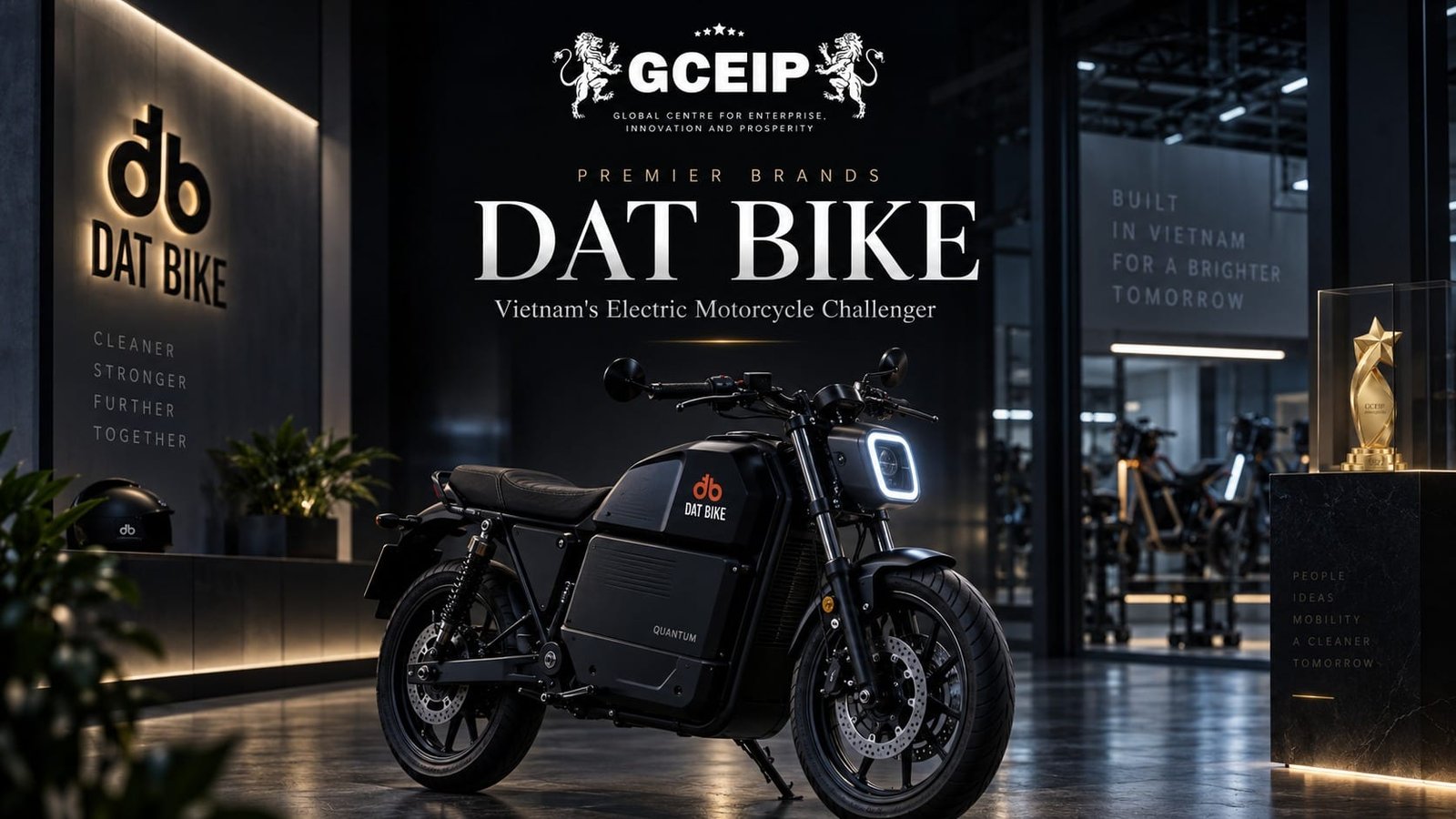
Dat Bike developed its Quantum range around addressing some of those concerns.
The company's Quantum S1 and S2 models advertise ranges of up to 285 kilometres per full charge, while the Quantum S3 offers a claimed range of up to 200 kilometres.
Features across the range include hill-start assistance, connected software and storage designed for daily mobility.
These are manufacturer specifications; actual riding range and charging performance depend on operating conditions.
Nevertheless, the strategy is significant.
Dat Bike has not concentrated solely on explaining why electric propulsion is environmentally preferable.
It has tried to demonstrate why a customer might prefer an electric motorcycle as a product.
That is a different commercial approach.
A company seeking mass adoption needs to address what customers already value, rather than expecting them to accept inconvenience because a technology is new.
But the company's next product development has taken that thinking considerably further.
ERA: The Shift From Enthusiasts to Everyday Families
In 2026, Dat Bike introduced ERA, a new range designed around practical household transportation.
The move marked an important expansion of its target market.
The company had initially attracted technology enthusiasts and early adopters willing to experiment with electric mobility.
ERA is aimed at a much broader customer base.
Its E2 model starts at VND 29.9 million, making it Dat Bike's first motorcycle priced below VND 30 million.
According to the company's published specifications, ERA offers up to 200 kilometres of claimed range, 50 litres of storage and a 5kW motor.
The range also incorporates integrated charging technology, intended to make charging more convenient without requiring customers to carry a separate external charger.
On the higher-end ERA E1, Dat Bike advertises a boost-charging mode capable of providing enough energy for approximately 30 kilometres of travel in 15 minutes under specified conditions.
The product decisions reveal how the company is thinking about the market.
Storage capacity matters to a family buying groceries.
Charging convenience matters to someone who uses a motorcycle throughout the day.
Ease of handling matters in crowded urban streets.
And price matters to customers evaluating alternatives to familiar petrol-powered models.
The transformation is not simply from petrol to electricity. It is from technology-led product development towards a product designed around everyday consumer behaviour.
That distinction could be critical to the company's next stage of growth.
Building a Manufacturing Business, Not Just a Motorcycle Brand
Dat Bike's business model requires an unusual combination of capabilities.
It must develop technology while also manufacturing physical products at a competitive cost.
The company has invested in engineering across motors, battery packs, battery management systems, controllers, software and vehicle structures.
This vertically integrated approach is intended to give Dat Bike greater influence over product performance, development speed and manufacturing costs.
However, vertical integration does not mean producing every component independently.
The company continues to work with external suppliers, particularly in areas where domestic manufacturing scale and specialist capabilities remain limited.
That balance becomes increasingly important as production volumes grow.
A promising prototype can be developed by a relatively small engineering team.
A mass-market vehicle business requires dependable supply chains, consistent manufacturing quality and the ability to deliver products repeatedly at scale.
According to investor disclosures in March 2026, Dat Bike had increased its production capacity fivefold over the preceding two years.
This reported increase provides evidence of manufacturing expansion.
But capacity is only one part of the business equation.
Factories must be utilised effectively. Product defects must be controlled. Suppliers must deliver consistently. Manufacturing costs must remain commercially manageable.
For Dat Bike, building the manufacturing organisation may ultimately prove as important as developing the vehicles themselves.
$51 Million in Funding—and a Different Kind of Investor Relationship
Dat Bike's development has attracted significant international and domestic investment.
In September 2025, the company announced a $22 million Series B funding round co-led by Japanese company F.C.C. and Rebright Partners, with participation from investors including Jungle Ventures.
At that stage, cumulative funding reached approximately $47 million.
In March 2026, Vietnamese securities firm Thien Viet Securities announced a further $4 million investment in the Series B financing.
That brought Dat Bike's reported cumulative funding to $51 million.
The financing provides resources for manufacturing expansion, distribution, supply-chain development and research.
But the most interesting aspect of the March investment is not only the capital.
Thien Viet Securities also identified plans to support Dat Bike through corporate governance advice, value-chain optimisation and capital-market connections.
Those capabilities become increasingly relevant when a hardware startup begins operating at greater scale.
The founder's technical expertise remains essential.
But a growing manufacturing company also needs financial discipline, management systems, supplier relationships and organisational capabilities that extend beyond the original engineering team.
Investment helps fund expansion. Building the institution capable of managing that expansion is the harder task.
The Business Beyond the Sale: Stores, Service and Customer Confidence
An electric motorcycle is a long-term consumer purchase.
Customers need more than a convincing demonstration or attractive product specification.
They need somewhere to examine the vehicle, take a test ride, obtain maintenance and access replacement parts.
That makes distribution and after-sales infrastructure fundamental to Dat Bike's business model.
The company has been expanding its nationwide 3S network, covering sales, service and spare parts.
It also reported opening a major service centre in Hanoi in August 2026 to support repairs, inspections, battery and motor servicing, spare-parts handling and technician training.
This is an important part of its transition towards mainstream consumers.
Early adopters may tolerate inconvenience while supporting a new technology.
Families purchasing a vehicle for everyday use usually expect established standards of support.
As more vehicles enter operation, service quality becomes a competitive issue.
A company that expands retail sales without expanding after-sales capacity can create problems for its own customers.
For Dat Bike, the strength of the service network could become a decisive factor in whether buyers regard it as a dependable alternative to long-established motorcycle brands.
A September 2026 Technology Agreement With Toshiba
Dat Bike's latest development also illustrates the growing importance of its industrial partnerships.
In September 2026, the company signed a memorandum of understanding with Toshiba Electronics Asia concerning electronic components and technologies intended for future electric motorcycle development.
The arrangement is aimed at combining Dat Bike's vehicle engineering and market knowledge with Toshiba's expertise in electronics and semiconductors.
It is a technology cooperation framework, not evidence that every proposed component has already entered mass production.
But the strategic direction is important.
For a company seeking to improve vehicle efficiency, electronic control and energy management while increasing manufacturing scale, access to capable technology partners matters.
It also reflects a wider change in Dat Bike's position.
The company began as a startup attempting to demonstrate the technical potential of a Vietnamese-made electric motorcycle.
It is now developing relationships with established international industrial suppliers.
The challenge will be translating those relationships into reliable products, better manufacturing processes and commercially meaningful improvements for customers.
Vietnam's Electric Motorcycle Market Is Accelerating
Dat Bike's development is taking place within a rapidly changing domestic market.
According to figures from Motorcycles Data reported by VnExpress, Vietnam recorded approximately 513,742 electric motorcycle sales in the first seven months of 2026.
That represented growth of 97.2% compared with the corresponding period in 2025.
Electric motorcycles accounted for approximately 27.6% of the country's reported two-wheeler market over that period.
These third-party estimates highlight the pace of market change, although they should not be confused with a complete official vehicle-registration dataset.
The opportunity for manufacturers is substantial.
But the competition is equally significant.
VinFast has expanded rapidly in electric two-wheelers. Established manufacturers such as Honda and Yamaha remain deeply embedded in the market, while other domestic and international electric-vehicle brands are competing across multiple price points.
Dat Bike therefore operates in an increasingly crowded industry.
Its strategy cannot depend entirely on the growth of electric mobility.
It must persuade consumers that its own vehicles offer a compelling combination of performance, practicality, price and after-sales support.
The company's engineering capabilities, developing product range and service infrastructure provide potential advantages.
Their commercial value must ultimately be demonstrated through customer adoption, reliability and sustainable economics.
GCEIP Analysis: The Real Transformation Is From Technology Startup to Consumer Manufacturer
Dat Bike represents an interesting shift in Vietnamese entrepreneurship.
It is attempting to develop a domestic technology and manufacturing business in an industry historically dominated by larger, established motorcycle producers.
Four strategic decisions stand out.
First, the company began with product performance. Its early motorcycles were developed to challenge the assumption that electric alternatives necessarily require significant compromises.
Second, it moved towards mass-market practicality. ERA reflects a stronger emphasis on daily household needs, including price, charging convenience and storage.
Third, Dat Bike is investing in industrial capabilities. Manufacturing capacity, technology development and supplier relationships are increasingly important elements of the business.
Fourth, it is building customer infrastructure. The retail and after-sales network is necessary to turn product interest into a dependable ownership experience.
Together, these decisions indicate a company moving beyond the typical technology-startup model.
The next phase is not simply about designing another impressive vehicle.
It is about proving that the business can manufacture, distribute and support electric motorcycles competitively at greater scale.
That is where Dat Bike's long-term significance will be determined.
The Business Lesson: Customers Shouldn't Have to Change Their Lives to Adopt Your Technology
There is an important lesson in Dat Bike's transformation for founders developing new technologies.
Innovation does not become commercially important merely because it is technically impressive.
It becomes important when customers can incorporate it into everyday life without unacceptable compromises.
For Dat Bike, this means understanding how people use motorcycles.
For an enterprise software business, it may mean understanding established workflows.
For a healthcare company, it may mean making new technology accessible within existing clinical processes.
For a financial services business, it may mean reducing friction rather than requiring customers to learn a complicated new system.
The principle is consistent.
The most successful innovation often changes the technology more than it asks customers to change their behaviour.
Dat Bike's move towards family-focused electric motorcycles provides a compelling example of that approach.
From Vietnam to Southeast Asia: The Next Challenge
Dat Bike has identified regional expansion as part of its longer-term ambition, with Thailand among the intended early international markets.
But successfully operating in Vietnam does not automatically establish the ability to compete abroad.
Distribution structures differ. Consumer preferences vary. Regulations, servicing expectations and supply chains introduce new requirements.
Dat Bike will need to demonstrate that its engineering, manufacturing and retail model can work beyond its home market.
It will also need to maintain the quality and competitiveness of its existing domestic operations.
The opportunity is larger than exporting motorcycles.
It is the possibility of developing a Vietnamese electric-mobility business with technology, manufacturing knowledge and commercial capabilities that can compete across Southeast Asia.
For founder Nguyen Ba Canh Son and the wider team, this represents a substantial new test.
Dat Bike has already demonstrated its ability to develop electric motorcycles and attract investor support.
The next chapter is about proving that a Vietnamese electric-motorcycle brand can become a dependable mainstream manufacturer—and eventually a regional competitor.
Premier Brands View
Dat Bike represents an emerging generation of Vietnamese enterprises investing in the technology, products and manufacturing capabilities required for international competition.
Its progression from early electric-motorcycle models to the Quantum and ERA ranges shows how a company can adapt its proposition as customer needs and market conditions evolve.
The company's reported funding, manufacturing expansion, distribution development and international technology partnerships provide evidence of substantial progress.
Its next stage will depend on customer adoption, product quality, service capability and commercial sustainability.
As Vietnam's electric two-wheeler market develops, the companies that succeed will need to do more than persuade consumers that electric mobility is possible.
They will need to demonstrate that it is practical, dependable and desirable.
Dat Bike is attempting to build exactly that proposition—designed, engineered and developed from Vietnam.
Key facts
What is Dat Bike?
Dat Bike is a Vietnamese electric motorcycle company founded in 2019 by Nguyen Ba Canh Son, who is its founder and CEO. It designs and develops electric motorcycles for the Vietnamese market.
What is Dat Bike ERA?
ERA is a Dat Bike range launched in May 2026 and designed for everyday household use. The ERA E2 starts at VND 29.9 million, and the company publishes up to 200 kilometres of claimed range, 50 litres of storage and a 5kW motor.
How much funding has Dat Bike raised?
Dat Bike announced a $22 million Series B round in September 2025, co-led by F.C.C. and Rebright Partners, which took reported funding to about $47 million. In March 2026 Thien Viet Securities announced a further $4 million investment in the Series B, bringing reported funding to $51 million.
What are Dat Bike's Quantum motorcycles?
Quantum is Dat Bike's earlier performance range. The company advertises ranges of up to 285 kilometres for the Quantum S1 and S2 and up to 200 kilometres for the Quantum S3. These are manufacturer specifications, and real range depends on riding conditions.
Where does Dat Bike plan to expand?
Dat Bike has identified regional expansion in Southeast Asia as a longer-term goal, with Thailand among its intended early international markets.
Is a GCEIP Premier Brands story an award?
No. A Premier Brands story is an editorial feature. It does not make its subject an award recipient, and recognition is subject to GCEIP's eligibility, review and selection standards.
Featured within GCEIP’s Transformational Leaders & Enterprises™ ecosystem. Explore the enterprise story behind the recognition: Transformational Enterprises and Premier Brands.
Know a leader or enterprise like this? Nominate them for Transformational Leaders & Enterprises™, in Dubai, Barcelona or London.
From continuous glucose monitoring and smart rings to blood biomarkers, women’s health and real-time biointelligence, Bengaluru-based Ultrahuman is attempting something far more ambitious than building another wearable. It wants to create a computing platform that understands the human body continuously.
From resort-style apartments and private pools to international expansion, branded residences and vertical integration, Imran Farooq has turned SAMANA Developers into one of Dubai’s fastest-rising property businesses — and is now building for a much larger stage.
From strengthening India’s chronic-therapy leadership to integrating major acquisitions and shaping a broader growth agenda, Aman Mehta is emerging as one of the key next-generation leaders in Indian pharmaceuticals.

 Ultrahuman · Health-tech and wearables