Dubai creates opportunity quickly.
For an emerging developer, recognisability can be as important as scale.
It also exposes weakness quickly.
In a real-estate market crowded with established developers, international investors and constantly changing buyer expectations, emerging companies do not have decades to build relevance.
They have to earn it project by project.
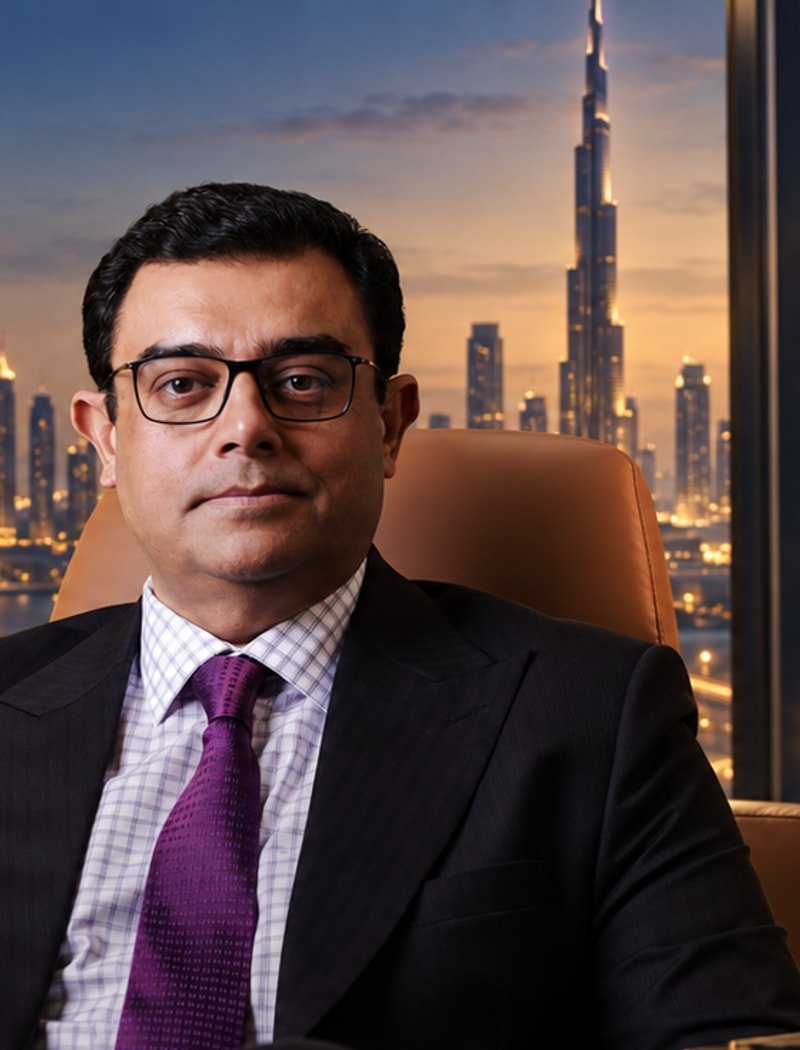
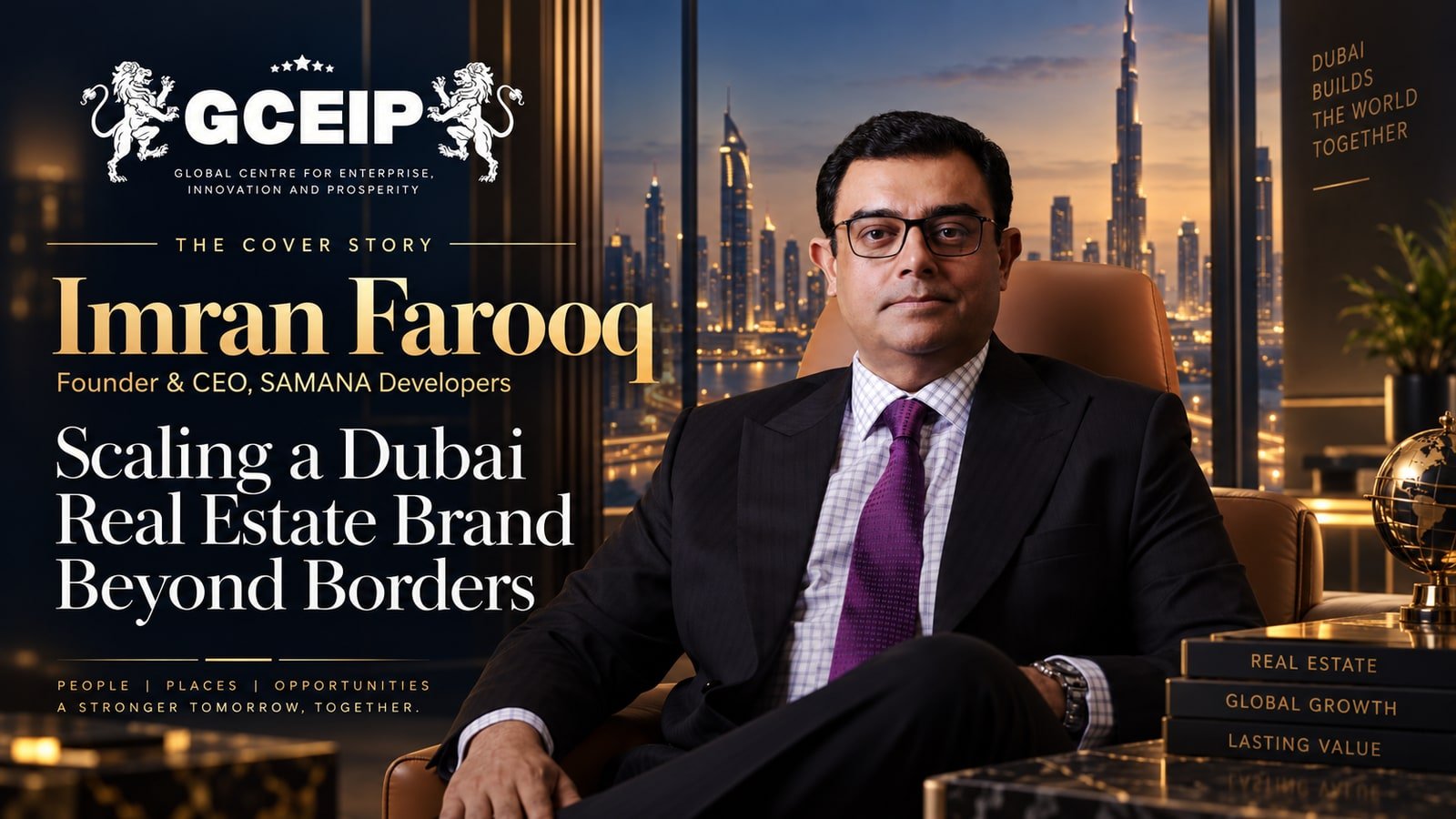
Imran Farooq has built SAMANA Developers around that reality.
Founded in 2017, the company has moved from its early developments in Dubai into a rapidly expanding portfolio of lifestyle-led residential projects, international ventures and branded partnerships.
The numbers illustrate the pace.
In 2025, SAMANA recorded approximately US$1.9 billion in gross sales, launched 16 projects in Dubai and reported 40 per cent year-on-year sales growth, with a portfolio exceeding AED 17 billion and roughly a 4.4 per cent share of the Dubai market.
But Farooq’s story is not simply one of rapid expansion.
The more interesting question is how he is attempting to turn momentum into an institution.
From Entrepreneur to Developer
Farooq’s entrepreneurial career began well before SAMANA Developers.
He established the wider SAMANA Group in 2003, building businesses across areas including corporate services and other professional activities before moving decisively into real estate.
That background influenced how he approached development.
SAMANA did not initially compete by trying to become the largest developer in Dubai. It needed differentiation.
The answer increasingly became lifestyle: private pools integrated into apartments, resort-inspired amenities, distinctive façades, and projects designed to make an apartment feel closer to a holiday destination than a conventional residential tower.
It created a recognisable SAMANA proposition.
While established developers could rely heavily on corporate heritage, SAMANA had to give buyers another reason to notice.
Product became the brand-building mechanism.
Selling More Than Square Footage
Real estate development can easily become commoditised. Bedrooms. Square metres. Payment plans. Location.
Farooq has pushed SAMANA toward a more emotional proposition.
The company repeatedly frames its developments around experiences: resort living, wellness, water features and private outdoor space.
That strategy is visible across projects such as SAMANA Santorini and other lifestyle-led schemes.
SAMANA Santorini, completed in 2026, illustrates the idea particularly well.
The low-rise project in Dubai Studio City contains 157 residences, with private swimming pools incorporated into many units.
The pool has become one of SAMANA’s most recognisable design signatures.
It is a seemingly simple feature. Commercially, however, it achieves something valuable: it makes the product immediately identifiable.
For an emerging developer, recognisability can be as important as scale.
From Sales Growth to Delivery
Rapid off-plan sales create one kind of success. Handover creates another.
As SAMANA’s portfolio has expanded, Farooq has increasingly had to shift the organisation’s attention toward execution.
The company entered 2026 with an operational programme calling for six project handovers during the year and another 11 in 2027, alongside expanded construction activity across multiple sites simultaneously.
This may be the most important stage in the company’s development.
Dubai’s off-plan market can reward strong launches, compelling design and effective sales networks. But long-term brands are created at delivery.
Does the finished building resemble what was marketed? Was it delivered reliably? Do buyers remain satisfied after moving in? Will investors purchase again?
As the number of projects rises, these questions become more difficult because organisational complexity multiplies.
Farooq’s real challenge is therefore no longer simply selling SAMANA. It is industrialising the company’s ability to deliver it.
Bringing More Capability In-House
One response has been vertical integration.
During its recent expansion, SAMANA established its own architectural and construction capabilities.
That is strategically significant. When a developer depends extensively on outside contractors and consultants, it can lose control over speed, cost, design consistency and execution.
Building internal capabilities gives SAMANA more control across the development lifecycle.
But it also raises the stakes. Vertical integration only works when internal teams perform better than the external ecosystem they replace.
For Farooq, it represents a move away from being primarily a property entrepreneur toward building a more comprehensive development organisation.
The shift may prove essential if SAMANA is to sustain the pace it has set for itself.
Dubai as the Foundation, Not the Boundary
SAMANA’s next chapter is increasingly international.
The company expanded into the Maldives with SAMANA Ocean Views interiors by ELIE SAAB — its first branded project and the first branded real estate development ELIE SAAB has put its name to in the Maldives. The development spans some 507,000 square feet across 190 residences, including beachfront villas, over-water bungalows and poolside apartments, with prices starting from around US$2.4 million.
Closer to home, the company moved beyond Dubai through a land acquisition agreement with Al Zorah City in Ajman, where it plans a waterfront development valued at approximately AED 2.7 billion (US$735 million) across more than 2,000 residential units on a site of around 577,000 square feet, at Al Zorah Marina.
This geographic expansion changes SAMANA’s profile.
Dubai remains the brand’s foundation. But Farooq is beginning to test whether the development formula can travel.
That is a much harder question.
Real-estate brands are often highly local. Planning regulations differ. Buyers differ. Construction ecosystems differ. Pricing differs.
What works in Dubai cannot simply be copied into another city or country.
The challenge will be preserving the SAMANA identity while adapting the product to each market.
The Branded-Residence Opportunity
The Maldives project also points toward another important direction: branded residences.
Luxury real estate is increasingly being shaped by partnerships between developers and international hospitality, fashion and lifestyle brands.
The commercial logic is powerful. A global brand can provide design identity, international recognition and — perhaps most importantly — borrowed trust.
For an ambitious developer expanding into new geographies, that trust can shorten the time required to establish credibility with international buyers.
Farooq appears increasingly comfortable operating within that world.
But branded residences introduce another responsibility. A famous name may bring buyers through the door. The developer still has to deliver the building.
In the long term, SAMANA’s own brand must become strong enough that partnerships enhance its credibility rather than substitute for it.
Building Through a Changing Market
The next phase of Dubai real estate may be more demanding than the last.
Construction costs can rise. Competition is intensifying. Large numbers of new projects are moving through the pipeline. And buyers are becoming more selective.
Farooq has publicly emphasised protecting existing purchasers even as building costs change. With a large proportion of SAMANA’s inventory already sold, the company has said it intends to absorb certain additional costs rather than retrospectively pass them to buyers.
That philosophy speaks directly to an issue central to the off-plan market: trust.
When a buyer pays for a home years before completion, they are effectively financing a promise.
Developers that understand the weight of that promise are better positioned to create repeat customers rather than one-time transactions.
Recognition, and the Expectations That Follow
Farooq’s profile has risen sharply alongside SAMANA.
In 2026, Gulf Business named him among its Top 50 Leaders and CEOs, and SAMANA has separately been recognised with industry awards including International Real Estate Company of the Year and Real Estate CEO of the Year.
Recognition matters. But it also raises expectations.
Once a business moves from emerging name to recognised industry participant, the standard changes.
Growth is no longer surprising. It is expected.
The next question becomes sustainability.
The Cover Story View
Imran Farooq’s journey captures something important about Dubai entrepreneurship.
The city gives ambitious businesses permission to think big early.
But thinking big and building sustainably are very different skills.
SAMANA has already demonstrated that it can attract attention, launch aggressively and sell at significant scale.
Now comes the more consequential phase.
Can Farooq convert a fast-growing developer into a durable real-estate institution?
The ingredients are increasingly visible: vertical integration, international expansion, recognisable product design, branded partnerships and a growing handover programme.
The opportunity is significant. So is the execution challenge.
If SAMANA can maintain quality while expanding across Dubai, Ajman and international markets, Farooq’s story may ultimately be less about becoming one of Dubai’s fastest-growing developers.
It may be about creating one of the next generation of UAE real-estate brands capable of travelling globally.
And that is a considerably bigger ambition.
Know a brand or leader like this? Nominate them for Asian Premier Brands and Leaders 2026. Entries close 16 October 2026.
Nominate

 Ultrahuman · Health-tech and wearables