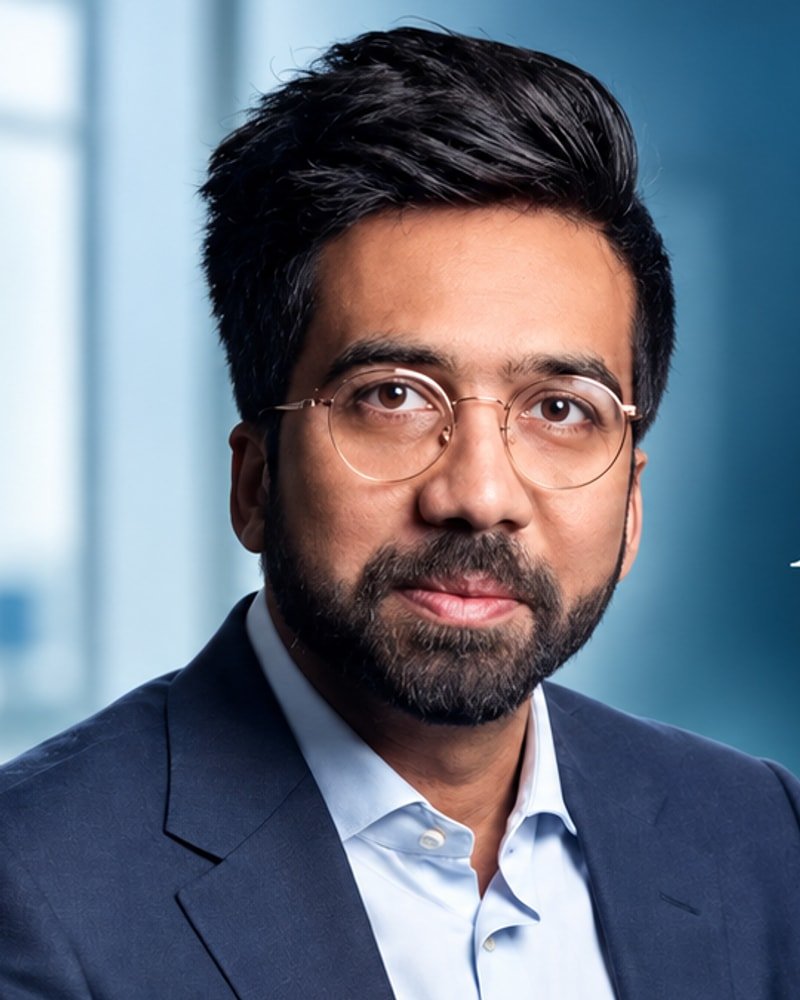
Reaching orbit is difficult, but a satellite becomes commercially valuable only when its data helps someone make a better decision. Awais Ahmed, co-founder and chief executive of Bengaluru-based Pixxel, has taken on both challenges. Pixxel builds hyperspectral Earth-observation satellites designed to measure information across many more wavelengths than conventional cameras. This can reveal patterns in vegetation, water quality and industrial environments that are difficult to see with ordinary imagery. Its next move is to build the services and industrial capacity that turn those images into useful answers.
From first spacecraft to an operating constellation
Pixxel’s first three Firefly satellites launched in January 2025 as part of the company’s move toward commercial constellation operations. Hyperspectral sensing can be powerful for agriculture, energy, mining and environmental monitoring, but it has limits: revisit frequency, atmospheric conditions, sensor calibration and interpretation all influence usefulness. By 2026, reporting described a six-satellite Firefly fleet, moving Pixxel beyond early demonstration missions. That is a meaningful technical milestone, although successful spacecraft deployment does not automatically prove high recurring customer revenue or profitability.
A larger national infrastructure role
On January 21, 2026, Pixxel announced a signed agreement with India’s space-sector regulator IN-SPACe to lead a consortium building a national Earth-observation constellation. The group includes Dhruva Space, PierSight and SatSure. The project, described as a commitment to invest over ₹1,200 crore over five years, is a planned public–private infrastructure undertaking. It changes the kind of accountability Ahmed faces. A national programme demands manufacturing discipline, coordination across companies, programme governance and long-term operational support as well as technical innovation.
More capital, more responsibility
The Times of India reported on September 7, 2026 that Pixxel raised US$100 million in a Series C round led by Temasek and Seraphim, bringing total funding to about US$195 million. The company intends to expand sensing capabilities, develop its Aurora Earth-intelligence platform and build additional satellite systems. Pixxel also announced a May 2026 partnership with Sarvam to explore an orbital computing mission. Both initiatives add development work beyond the existing Firefly fleet; the announced missions remain future projects.
The missing link between sensing and decisions
A satellite company can generate scientifically rich imagery while its customers struggle to interpret it. Farmers, mineral operators and environmental agencies typically need timely indicators integrated into existing workflows, not enormous volumes of raw data. Pixxel’s Aurora proposition aims to address that gap. To prove the business case, the company will need examples with independently corroborated outcomes, reliable revisit times and clear limitations caused by weather or sensor conditions. The operating challenge is to connect hardware reliability with software trust. That is a more demanding business than launching a satellite successfully.
GCEIP Analysis
Ahmed’s leadership is moving from the founder-led phase of proving a scientific sensor to the more complex phase of managing infrastructure, software and multi-customer delivery. The business moat will depend on data quality, dependable coverage and applications that customers pay for repeatedly. Its contracts and investment show commercial and institutional interest, but the long-term economics of the constellation still require scrutiny. Recurring data sales will be needed to support the cost of operating and replacing spacecraft.
GCEIP View
Awais Ahmed’s next challenge is to make advanced observations understandable and commercially indispensable. Pixxel has demonstrated that India can build sophisticated private Earth-observation hardware. The 2026 funding and national constellation agreement raise the stakes: those capabilities now need to operate reliably at scale. The most important future story may be the decisions Pixxel’s data helps others make, rather than the satellites themselves.
Key facts
Who is Awais Ahmed?
Awais Ahmed is the co-founder and CEO of Indian satellite and Earth-intelligence company Pixxel.
What is Pixxel building?
Pixxel develops hyperspectral satellites, Earth-observation software and related space infrastructure.
If this story is about you or your company, you are welcome to link to it. Copy either snippet below into your website, press page, email signature or post.
About this feature
This is a GCEIP editorial feature. Publication does not confer nomination, finalist, winner or honouree status.
The founder who challenged India's fragmented hotel industry is now leading PRISM through a much larger transformation. With Motel 6 reshaping its international business and a proposed IPO approaching, Ritesh Agarwal faces a different test of leadership: building a financially resilient global hospitality company.
From solving daily delivery challenges for restaurant chains to building an on-demand refrigerated logistics platform, the founder of JustDeliveries is helping reshape how India's food businesses grow.
Euler Motors is expanding its electric commercial-vehicle business in India. Founder Saurav Kumar's central challenge is to prove that cleaner delivery vehicles can also work financially for businesses that depend on uptime.
From strengthening India’s chronic-therapy leadership to integrating major acquisitions and shaping a broader growth agenda, Aman Mehta is emerging as one of the key next-generation leaders in Indian pharmaceuticals.