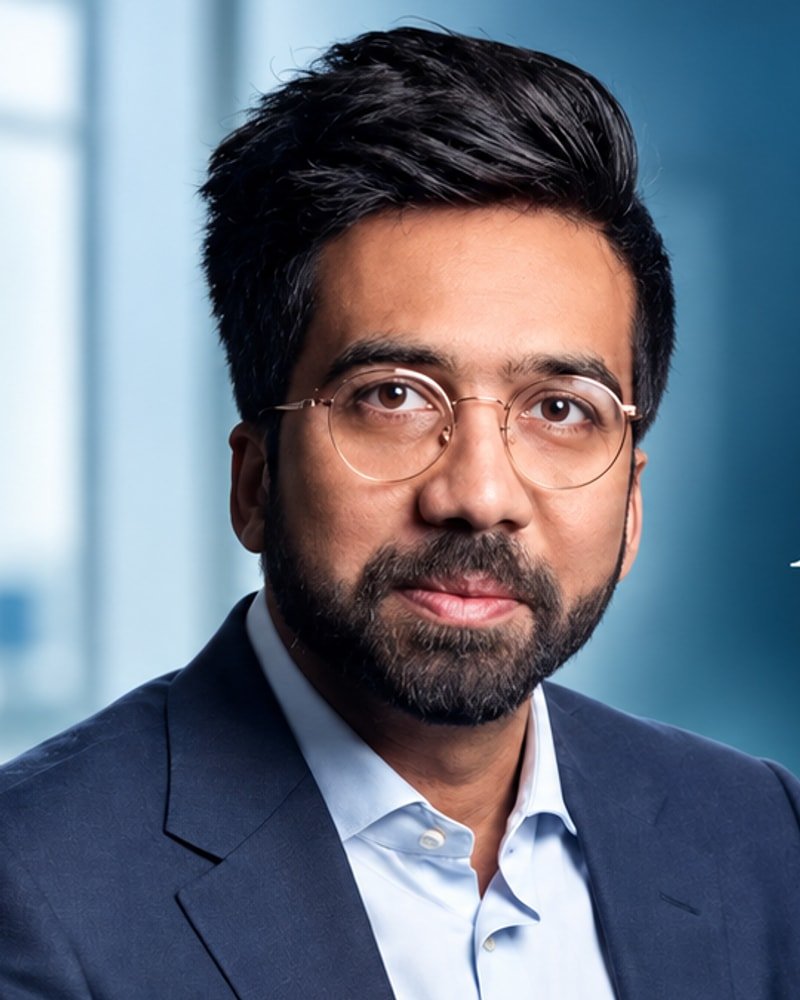
Jey Jenthan: Building Technology from a Connectivity Problem in Jaffna
SenzMate’s beginnings trace to a practical need: remote monitoring in a place where power and access could not be taken for granted. Co-founder Jey Jenthan has since built an AIoT business serving several industries.
JJ
Jey JenthanCo-founder and CEO · SenzMate · Sri Lanka
GCEIP Editorial Desk ·
Editorial. Published by the GCEIP editorial desk under our editorial policy. An editorial story does not make its subject an award recipient.
Quick ReadHighlights from this page⌃
SenzMate co-founder Jey Jenthan built an industrial IoT company from Jaffna, with products for agriculture, insurance and connected operations.
When a small inconvenience suggests a larger system
In the early days of SenzMate’s story, the problem was concrete: irrigation systems in Jaffna had to be switched on after dark, and getting to them required time and effort. The company’s account says that the founders’ experience as sons of farmers helped spark an interest in remote technology. What began as a way to monitor or control equipment from a distance became a broader business in connected systems.
Jey Jenthan is a co-founder and CEO of SenzMate, which was established in 2015 in Jaffna. The company’s current profile describes an AIoT platform serving agriculture, cold-chain, insurance and other sectors. “AIoT” combines internet-connected devices and data analysis: sensors collect information from the physical world, while software helps customers interpret it or act on it.
The company’s history traces its origin to a 2009 idea among Jenthan and co-founders John Nirajh and Miller Alexander. They later incorporated through the Yarl IT Hub network, began operations in Colombo, and released the first version of the SenzMatica platform in 2017. Those milestones show a long development path from a local problem to a commercial product.
From one platform to focused businesses
SenzMate did not keep every sector under one general-purpose label. Its company history says it created specialised operating arms, including SenzAgro for agriculture and Mosurance for motor insurance. The structure suggests a recognition that different industries need different workflows, data and customer relationships even when the underlying technology—sensors and connected devices—overlaps.
That focus can help a technology company solve industry-specific problems. In agriculture, monitoring conditions may help with irrigation and crop management. In cold-chain operations, connected data can help track temperature and handling. In insurance, telematics may inform risk or service workflows. These are distinct applications; results depend on product design, installation quality and how customers use the information.
SenzMate’s official site reports that its platform has been deployed in more than 15 countries and serves eight or more industries, with a workforce exceeding 100. These are company-reported figures. The company also says SenzMatica had more than 50 projects globally by 2023, and its platform-driven services were deployed in over 15 countries by 2024. Such measures indicate breadth, though deployments do not reveal how deeply a customer relies on the product or what outcomes it achieved.
In 2025, SenzMate said it consolidated its headquarters in Singapore. A company with roots in Jaffna and operations across markets now has to balance local identity with regional growth. The shift may help with access to customers and partners, but it also raises the bar for a distributed company: implementation and support must remain responsive across different markets.
The execution behind connected devices
IoT businesses often face a gap between a promising demo and a durable service. Devices must survive real operating conditions. Networks can fail. Data must be useful to people making decisions, and customers need to maintain equipment after installation. Software subscriptions can scale, but the business may still depend on field teams, integration and industry-specific support.
Jenthan’s entrepreneurial path offers a useful example of how technology can grow from a local constraint. But the interesting measure is not how many sectors appear on a website. It is whether SenzMate can build repeatable deployments that solve each customer’s problem, then maintain them as the business expands. Its sector arms may be one way to keep that work close to the users.
GCEIP View
SenzMate’s story begins with a question of access and control, then follows the practical work of turning connected technology into industry products. Jenthan’s next challenge is to keep the company’s delivery as dependable as its platform expands across geographies and sectors. The best evidence will come from customer outcomes that show what changed after a system was installed, and how long those improvements lasted.
If this story is about you or your company, you are welcome to link to it. Copy either snippet below into your website, press page, email signature or post.
Where this story fits
Featured within GCEIP’s Transformational Leaders & Enterprises™ ecosystem.
Know a leader or enterprise like this? Nominate them for Transformational Leaders & Enterprises™, in Barcelona or London. Nominations for Dubai are closed.
SJSampath Jayasundara · hSenid Business Solutions PLC
The Sri Lankan technology executive is navigating a shift towards more predictable recurring revenue and AI-enabled workforce software. Recent financial results provide a measurable view of the transformation—and its unfinished work.
From software engineering in the United States to electric-motorcycle manufacturing in Vietnam, Nguyen Ba Canh Son has taken Dat Bike from an early engineering bet into a growing mobility business. Its next test is scale.
From resort-style apartments and private pools to international expansion, branded residences and vertical integration, Imran Farooq has turned SAMANA Developers into one of Dubai’s fastest-rising property businesses — and is now building for a much larger stage.
From strengthening India’s chronic-therapy leadership to integrating major acquisitions and shaping a broader growth agenda, Aman Mehta is emerging as one of the key next-generation leaders in Indian pharmaceuticals.