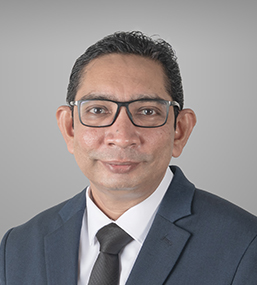
The Turnaround Inside a SaaS Business: Sampath Jayasundara at hSenidBiz
The Sri Lankan technology executive is navigating a shift towards more predictable recurring revenue and AI-enabled workforce software. Recent financial results provide a measurable view of the transformation—and its unfinished work.
SJ
Sampath JayasundarahSenid Business Solutions PLC · Sri Lanka
GCEIP Editorial Desk ·
Editorial. Published by the GCEIP editorial desk under our editorial policy. An editorial story does not make its subject an award recipient.
Quick ReadHighlights from this page⌃
Sri Lankan software CEO Sampath Jayasundara is advancing recurring revenue and AI-enabled HR capabilities at hSenidBiz after its FY2026 operating turnaround.
A Business Model Under Pressure
For an enterprise software company, rapid growth is not necessarily enough. Revenue quality matters: how much comes from repeat subscriptions, how much depends on irregular projects and how much cash remains after the company has delivered its services?
Sampath Jayasundara, chief executive of Sri Lanka's hSenid Business Solutions PLC, has been helping manage that challenge. The company develops human-resources software, including its PeoplesHR platform, for organisations in multiple markets.
The strategic story is one of changing the economic foundation of a technology enterprise. Moving towards a stronger recurring software model can improve predictability, but it often requires difficult decisions about products, sales processes, implementation work and operating costs.
Jayasundara's leadership should be assessed against those operational results rather than general claims about digital transformation.
Financial Evidence of a Shift
The company's reported results for the financial year ended March 31, 2026 provided a concrete milestone. hSenidBiz announced revenue of approximately LKR2.1 billion, 13% higher year on year, and a positive normalised EBITDA of about LKR200 million. The annualised recurring revenue exit rate reached US$5.5 million, while recurring revenue represented approximately 74% of total revenue for the full year.
These are company-reported financial measures, and normalised EBITDA is not the same as statutory net profit. In particular, the annual profit-before-tax result remained slightly negative. The improvement therefore represents a meaningful operating turnaround, not evidence that all profitability concerns had disappeared.
A November 7, 2026 report on hSenidBiz's second quarter of FY2027 showed the direction continuing. Quarterly revenue reached LKR598.6 million, up 16% year on year. Recurring revenue accounted for 76% of total revenue, while exit annualised recurring revenue was reported at US$5.7 million.
The company also reported a quarterly net loss, affected in part by foreign-exchange movements. That reminder is important: the transition towards better recurring revenue does not remove financial volatility.
Building AI Into an Operating Product
hSenidBiz is also trying to extend its software beyond traditional HR administration. The company has discussed Lexi AI and Lexi Insights, capabilities designed to help enterprise customers interpret workforce data and support decisions.
For Jayasundara, the challenge is to turn those capabilities into features customers actually use and value. Artificial intelligence is not a substitute for an understandable workflow. Employers need dependable data, appropriate access controls and clarity about how recommendations are produced.
A software provider also has to balance innovation with continuity. Customers depend on payroll and workforce applications for sensitive business processes; unreliable upgrades can damage confidence. Product ambition must therefore be matched by security, service and implementation discipline.
The company has described its near-term priorities as improving sales effectiveness, deepening customer adoption and developing predictable recurring growth. Those are operational tasks with results that can be tested over successive quarters.
GCEIP Analysis
This story stands out because it has measurable evidence of transformation. Rather than relying solely on a funding announcement or a founder's ambition, hSenidBiz provides quarterly and annual operating figures that allow readers to follow the progress.
The leadership challenge is not to erase every risk. It is to shift the economics of the business towards greater revenue quality while building a product relevant to a changing technology market. Jayasundara must manage the tension between investing in AI and maintaining financial discipline.
The company's latest figures suggest improvement, with the important qualification that a profitable normalised operating result and a loss after other items can coexist.
GCEIP View
Sampath Jayasundara's work at hSenidBiz illustrates a type of transformation that rarely attracts the attention given to spectacular startup launches: the patient restructuring of an existing technology business.
The relevant question is whether stronger recurring revenue, disciplined operations and useful AI features can reinforce one another over time. If that happens, hSenidBiz will offer an instructive Sri Lankan case of enterprise adaptation. The strongest leadership story is not the promise of an immediate breakthrough, but the evidence of a business model becoming more durable quarter by quarter.
If this story is about you or your company, you are welcome to link to it. Copy either snippet below into your website, press page, email signature or post.
Where this story fits
Featured within GCEIP’s Transformational Leaders & Enterprises™ ecosystem.
Sampath Jayasundara, hSenid Business Solutions PLC, official:hsenidbiz.com
Know a leader or enterprise like this? Nominate them for Transformational Leaders & Enterprises™, in Barcelona or London. Nominations for Dubai are closed.
SenzMate’s beginnings trace to a practical need: remote monitoring in a place where power and access could not be taken for granted. Co-founder Jey Jenthan has since built an AIoT business serving several industries.
From taking Nykaa offline to building its fashion business and now scaling House of Nykaa, Adwaita Nayar is helping transform one of India’s most recognised digital-first companies into a portfolio of enduring consumer brands.
With one foot inside one of the Middle East’s best-known property groups and another building an independent PropTech platform, Amira Sajwani is challenging the traditional rules of how real estate is bought, financed and owned.
From expanding hospital networks to digital health, AI-enabled care and a growing Saudi footprint, Alisha Moopen is helping transform Aster DM Healthcare from a traditional provider into a connected healthcare ecosystem for the GCC.