
Can a Delivery Fleet Go Electric? Mober’s Logistics Transformation
Philippine logistics business Mober is testing how electric delivery vehicles can move from pilot projects into operational fleets and regional contracts.
Nomination Stories · Southeast Asia · Featured Enterprise
Packworks is bringing transaction data and inventory recommendations to Filipino sari-sari stores. Its 2026 research suggests measurable potential, while also raising important questions about causation and representativeness.
GCEIP Editorial Desk ·
Editorial. Published by the GCEIP editorial desk under our editorial policy. An editorial story does not make its subject an award recipient.
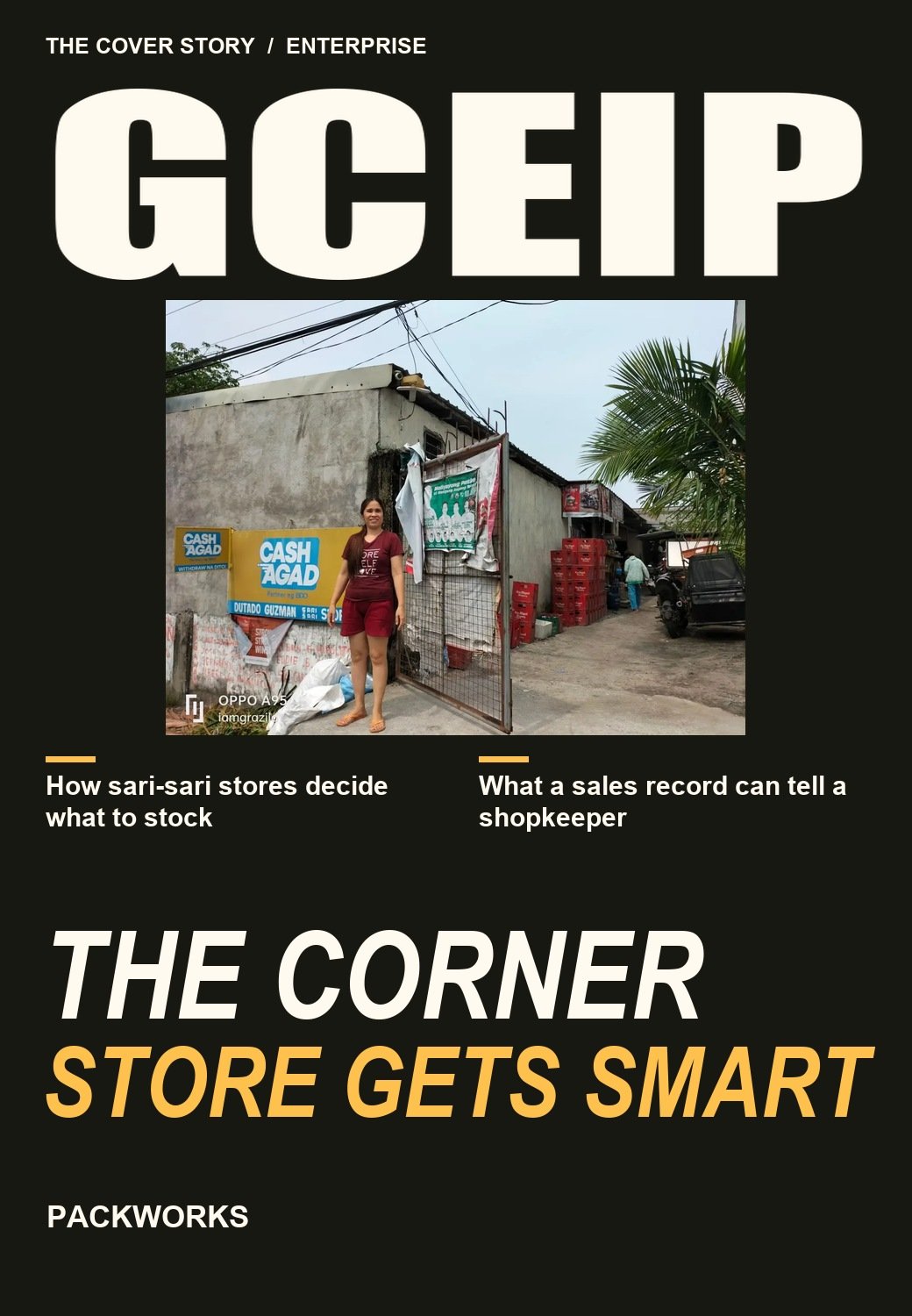
A sari-sari store is often the closest source of everyday essentials in a Filipino neighbourhood. But the owner must make constant decisions about which products to stock, how much inventory to purchase and how to manage limited working capital.
Those decisions can be difficult when demand changes by location, season and household budgets. Larger retailers have dedicated analysts and sophisticated software. Many small shops do not.
Packworks is trying to narrow that gap. The Philippine technology company provides a platform designed to help micro-retailers manage transactions and obtain more useful information from their sales activity.
Its central proposition is simple: a store that understands its own demand may make better decisions about what to buy and when.
Packworks has developed an AI-supported Store Insighting Project, or SIP, using store data to provide inventory and product-mix recommendations. The system aims to make analytical capabilities accessible to shopkeepers who are unlikely to hire a data scientist.
In June 2026, Packworks published results from an analysis of stores using the system. It reported that median sales of the top 50 products among participating shops rose by 79% over the period examined. Independent reporting in the Philippine press also described the analysis and the company's wider network of approximately 300,000 micro-retailers.
The numbers are attention-grabbing, but they must be interpreted accurately. The 79% figure relates to a defined group of products and participating stores; it is not proof that every shop increased overall revenue by that amount. Nor does an observed change by itself establish that software alone caused the improvement.
The company has also published other figures for total sales and transaction growth among the observed group. Those results merit further evaluation through clearly documented sample selection, baseline comparisons and longer observation periods.
Inventory ties up cash. When a store purchases too much of a slow-moving product, it has less capital available for items customers actually want. When it orders too little of a popular item, it loses a sale and may disappoint a regular customer.
A useful recommendation system can help reduce both problems, but its quality depends on the data available. A small shop's records may be incomplete. Demand can shift because of price changes, holidays, school schedules and local events. A model trained on one location may not work equally well elsewhere.
Packworks must therefore create tools that owners understand and trust. Advice has to be practical, not a confusing stream of technical scores. Customers should also be able to see when a recommendation is uncertain and make their own commercial decisions.
The company faces another challenge: the economics of serving very small businesses. A platform can create measurable value yet still struggle if support, acquisition or servicing costs outweigh the revenue each customer generates. Partnerships with manufacturers and distributors may help, but must be designed around the interests of the retailers.
Packworks reflects a meaningful transformation in the application of AI. Rather than asking consumers to use an entirely new kind of product, it is placing analytics inside a familiar commercial workflow.
The significance of its 2026 research lies in the possibility that modest, actionable recommendations can improve decisions across a vast network of small shops. The company's strongest next step would be rigorous, longer-term evidence linking recommendations to healthier inventory, profit and business resilience.
Packworks is building an enterprise around an often overlooked economic unit: the neighbourhood store. Its technology offers the prospect of bringing data-driven retail practices to entrepreneurs who have traditionally operated with limited information.
The challenge now is to demonstrate reliable improvements beyond a limited study and across varied locations. If Packworks can do that, its impact may be visible in stronger small businesses, not merely in impressive AI performance claims. That is a transformation rooted in everyday commerce.
If this story is about you or your company, you are welcome to link to it. Copy either snippet below into your website, press page, email signature or post.

Featured within GCEIP’s Transformational Leaders & Enterprises™ ecosystem.
Know a leader or enterprise like this? Nominate them for Transformational Leaders & Enterprises™, in Barcelona or London. Nominations for Dubai are closed.
Philippine logistics business Mober is testing how electric delivery vehicles can move from pilot projects into operational fleets and regional contracts.
 ShopBack · E-commerce
Founded in Singapore in 2014, ShopBack spent a decade turning a browser cashback habit into Asia-Pacific’s largest rewards network, reaching unicorn status in 2026 on the back of quiet profitability. Its next move is harder: standing at the actual point of sale, not just after it.
 Cred · Fintech
Cred built its business on a contrarian idea — reward India’s most creditworthy consumers, not the underbanked majority. In 2026, that bet drew a $900 million investment from Meta, a $4.5 billion valuation, and sent its founder to run WhatsApp worldwide.
From performance-focused electric motorbikes to affordable family transportation, Dat Bike is taking on one of Southeast Asia's most established consumer habits. Its next challenge is not simply building a better electric motorcycle, but building a manufacturing and service business capable of competing at national and eventually regional scale.
Choose an assistant to explore this page further.
Opens in a new tab. You can also copy the prompt into your assistant.