
The Last-Mile City: Krisada Kritayakirana’s Electric Tuk-Tuk Experiment
MuvMi has turned the familiar tuk-tuk into an app-booked shared journey. Its founder’s challenge is to make urban mobility work at the neighbourhood level.
Nomination Stories · Southeast Asia · Featured Leader
Living Roots is trying to improve farm yields while reducing dependence on imported synthetic inputs. For co-founder Avika Narula, the important work is connecting biological products, field evidence and business partnerships.
GCEIP Editorial Desk ·
Editorial. Published by the GCEIP editorial desk under our editorial policy. An editorial story does not make its subject an award recipient.
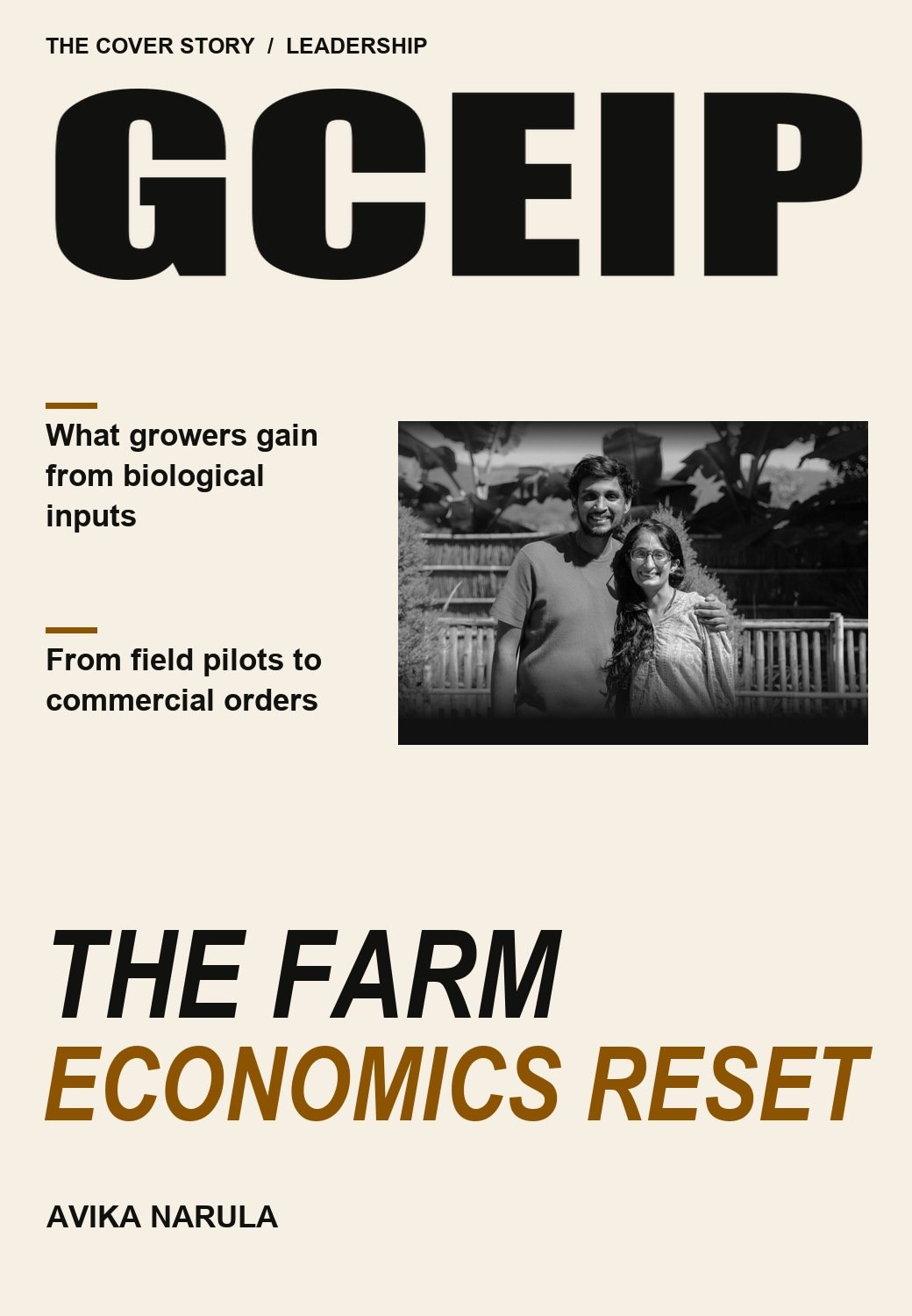
Fertilizer is both necessary to modern farming and a significant cost for growers. For agricultural businesses serving thousands of small farms, volatile input prices can threaten the economics of an entire supply chain. Thailand-based Living Roots is approaching that problem through locally developed biological and crop-support products combined with field monitoring and digital tools.
Avika Narula co-founded the business with Abhi Agarwal, who is identified in its August 2026 funding announcement as co-founder and chief executive. Narula has been identified in previous investment coverage as co-founder and chief operating officer. That role is worth distinguishing: the challenge in bringing an agricultural technology product to market often lies as much in operations and partnerships as in the underlying research.
The company works with agribusinesses and farmer networks rather than depending entirely on one-by-one consumer sales. Its inputs are designed for real farming practices, with monitoring and support that can help partners observe outcomes across distributed fields.
Living Roots attracted early investor attention in 2025. Coverage of a bridge financing described pilot programmes and commercial contracts, while the company expanded its testing and production ambitions. By August 2026 it had announced a seed round backed by Epic Angels and a group of angel investors.
More importantly, the company reported active partner deployments in Thailand, Indonesia and India. Its August release described Thai partner-network results of 20–30% improved yields and approximately halved synthetic fertilizer demand. Those figures are company-reported partner outcomes; they are not universal guarantees for all crops, soils or farming conditions.
Living Roots' official site also described programmes across more than 10,000 acres and products developed from largely upcycled local inputs. Again, these should be treated as the company's own operating metrics until independently audited.
For Narula and the team, this is the difficult stage of agricultural enterprise-building. Results seen in one pilot must be repeated across crops, weather conditions, field practices and farmer networks. An agribusiness buyer needs a predictable programme, not simply a promising demonstration.
Many agricultural innovations struggle because they require farmers to change too much at once. A solution that creates extra labour, uncertainty or cash demands may not be adopted, even when its scientific case is interesting. Living Roots says its approach is intended to fit existing practices and support partners through products and ongoing field monitoring.
That implies a substantial operational burden. A local biological input must be produced consistently. Field teams must explain usage clearly. Partner networks need reliable reporting. And the business must avoid confusing improvements observed on particular farms with results that can be promised to every farmer.
The underlying commercial idea is straightforward: better input efficiency is valuable only if it improves farm economics. Lower chemical demand alone does not prove that a programme is a success. Crop quality, harvest volume, cost per hectare and the willingness of growers to renew must all be considered.
Narula's leadership story is about turning an environmental ambition into something businesses can purchase, deploy and measure. That requires commercial discipline as much as enthusiasm for regeneration.
The August 2026 seed round provides resources for expansion, but capital is not the central evidence of transformation. The stronger signal is whether the company can demonstrate recurring adoption, reliable results across seasons and a supply chain capable of supporting geographically dispersed customers.
The company is working in a difficult sector, where biological complexity and seasonal variability make easy promises dangerous. Its approach deserves interest precisely because the operational test is demanding.
Avika Narula's work at Living Roots illustrates an emerging model of agricultural leadership: combine locally relevant products with service, data and farmer-network relationships, rather than relying on a single technological breakthrough.
The opportunity stretches across Southeast and South Asia. The real measure of progress will be whether Living Roots can convert reported field results into repeatable improvements in farmer returns and partner economics. If it succeeds, its contribution will be visible not only in financing announcements but in healthier, more productive and more resilient farm businesses.
If this story is about you or your company, you are welcome to link to it. Copy either snippet below into your website, press page, email signature or post.

Featured within GCEIP’s Transformational Leaders & Enterprises™ ecosystem.
Know a leader or enterprise like this? Nominate them for Transformational Leaders & Enterprises™, in Barcelona or London. Nominations for Dubai are closed.
MuvMi has turned the familiar tuk-tuk into an app-booked shared journey. Its founder’s challenge is to make urban mobility work at the neighbourhood level.
Ricult began with a question familiar to many technology founders: could digital tools help farmers make better decisions? Its co-founder Aukrit Unahalekhaka has spent years testing that idea against the realities of small farms.
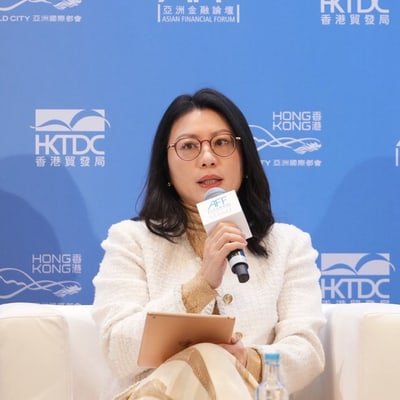 Maggie Ng · HSBC
Five years after joining the bank, Maggie Ng took charge of HSBC in Hong Kong — the market that matters most to the group, at the moment the group is being taken apart and put back together.
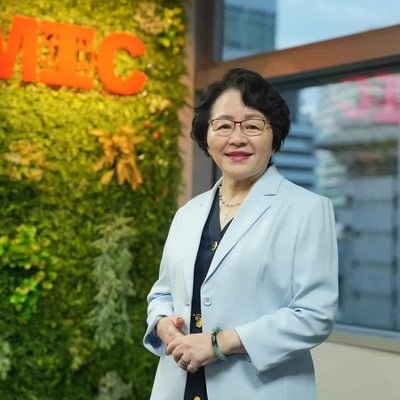 Margaret Kao · Marketech International
Founded in 1988 and still standing after every downturn since, Marketech International occupies the part of the semiconductor supply chain almost nobody outside it can name — and Margaret Kao has run it from the start.
Choose an assistant to explore this page further.
Opens in a new tab. You can also copy the prompt into your assistant.