Everyone knows the names at the end of the semiconductor supply chain. Almost nobody can name the companies in the middle of it.
The companies that supply the fabs are subject to the same cycle as the chipmakers, without the pricing power or the public sympathy.
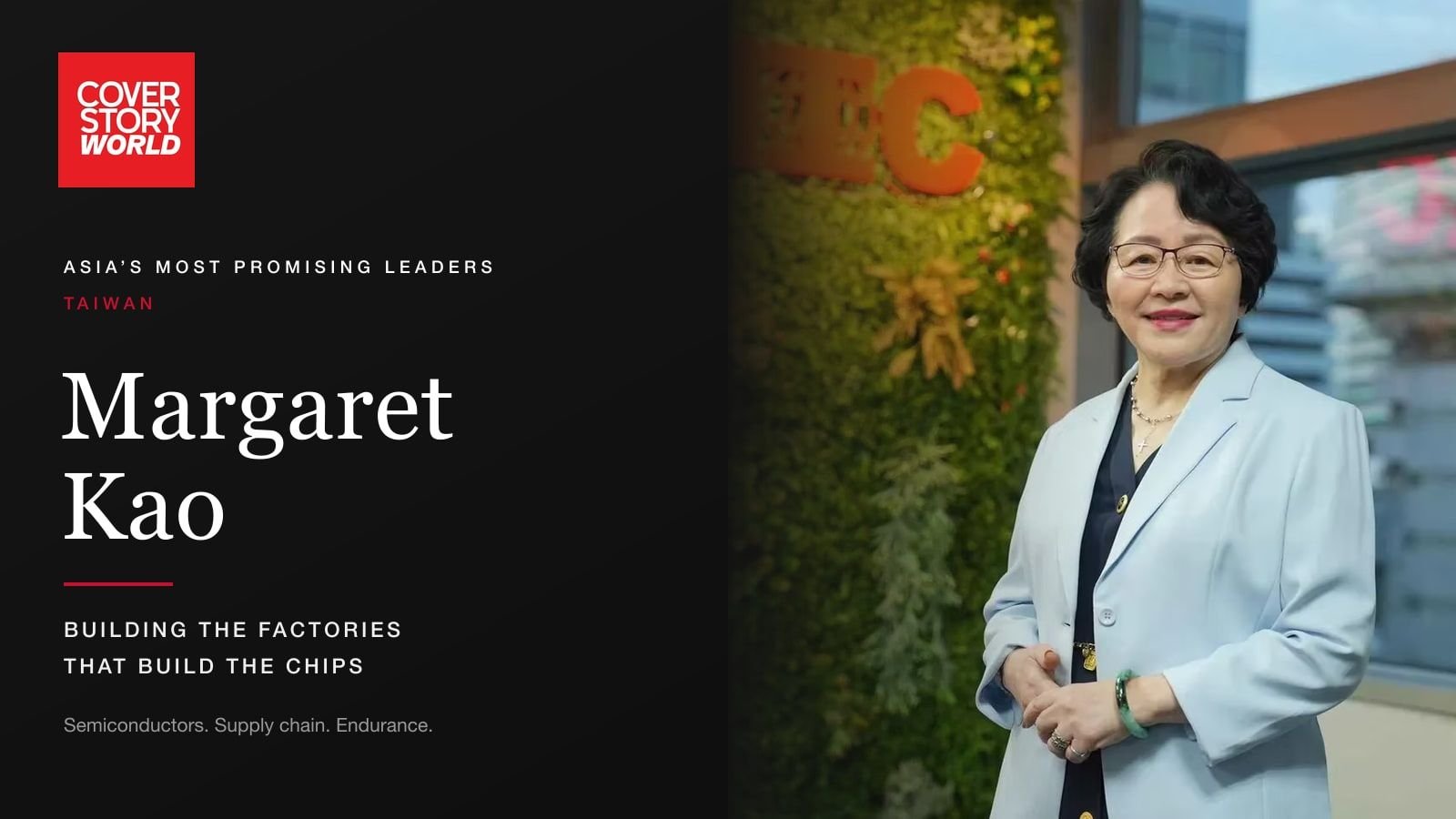
Marketech International sits in that middle. Founded in Taiwan in 1988, it supplies the materials, equipment and engineering that go into building and running semiconductor and display fabrication plants — the facilities where advanced chips are actually made.
Margaret Kao has led it since the beginning.
That is nearly four decades in one of the most brutally cyclical industries in the world.
The Business Nobody Photographs
A fab is one of the most demanding structures in modern industry. Air purity, vibration tolerance, water quality, gas delivery, chemical handling — the building is as engineered as the process inside it.
Companies like Marketech supply that layer: the cleanroom systems, the process materials, the equipment integration, the engineering services that keep a plant within tolerance once it is running.
It is unglamorous, deeply technical, and structurally essential. When a chipmaker announces a new fab, a chain of suppliers of this kind is what turns the announcement into a functioning plant.
The work does not produce a consumer brand. It produces dependence.
Surviving the Cycle
The semiconductor industry runs in cycles of overbuild and correction, and the suppliers feel them harder than the chipmakers do.
When capital expenditure is flowing, equipment and materials suppliers grow quickly. When it stops — and it always stops — orders can evaporate in a quarter, while the technical staff, inventory and customer relationships still have to be carried.
The companies that supply the fabs are subject to the same cycle as the chipmakers, without the pricing power or the public sympathy.
Surviving from 1988 to now means having been through the downturn of the late 1990s, the collapse after 2000, the financial crisis, the memory gluts, and the more recent swings driven by pandemic demand and its unwinding.
Longevity in this business is not a soft achievement. It is the achievement.
Taiwan’s Real Advantage
Taiwan’s semiconductor position is usually explained through its largest manufacturers. That explanation is incomplete.
What is harder to replicate than any single fab is the density of the supporting ecosystem around it — the equipment integrators, materials suppliers, engineering contractors and specialist service firms clustered close enough to respond within hours.
Marketech is part of that layer. It is one reason the capability has been so difficult for other countries to reproduce quickly, however much capital they commit.
As fab construction expands into the United States, Japan and Europe, that supporting ecosystem is what those projects must import or rebuild.
The Cover Story View
Margaret Kao’s career is a study in a kind of leadership that rarely attracts attention: staying with a difficult, technical, cyclical business for decades and compounding a position within it.
She founded a company in an industry that has since become the most strategically contested in the world, and kept it relevant through every turn of the cycle.
The next phase is the interesting one. Fab construction is globalising, and the suppliers that have spent decades serving Taiwan are being asked whether they can follow their customers abroad.
For a company built on proximity and response time, that is a genuine test — and one worth watching.
Know a brand or leader like this? Nominate them for Asian Premier Brands and Leaders 2026. Entries close 16 October 2026.
Nominate

 Ultrahuman · Health-tech and wearables