
The Intelligence Beneath the Soil: Nguyen Do Dung’s Enfarm Mission
Enfarm co-founder Nguyen Do Dung is building soil sensors and advice for Vietnamese growers facing costly fertiliser decisions.
Nomination Stories · Southeast Asia · Featured Leader
Selex Motors is tackling a practical barrier to electric two-wheelers: the time and cost of charging. Its founder, Nguyen Huu Phuoc Nguyen, is building the vehicle and battery network together.
GCEIP Editorial Desk ·
Editorial. Published by the GCEIP editorial desk under our editorial policy. An editorial story does not make its subject an award recipient.

An electric motorcycle can look convincing in a showroom and still fail the daily test. A courier cannot afford to lose working time waiting for a battery to charge. A rider who travels long distances needs to know where a replacement battery is available. The machine and its energy supply have to work as one service.
That is the problem Nguyen Huu Phuoc Nguyen and his co-founders set out to solve with Selex Motors. The Hanoi-based company describes itself as a smart electric vehicle business, but its proposition reaches beyond the motorcycle: it is developing vehicles, battery services, software and swapping infrastructure as parts of the same system.
Nguyen’s route to that idea ran through engineering. Selex’s own account says he and co-founder Nguyen Trong Hai completed doctoral studies in mechanical engineering at the University of Michigan, while co-founder Nguyen Dinh Quang brought expertise in internet-connected systems. The company was founded in 2018. Those details matter because its original design question was not simply how to make an electric bike. It was how to make one usable in the dense, high-frequency transport market around it.
Selex has focused on the economics of commercial use. Its Camel model is positioned for delivery work, where range, reliability and turnaround time directly affect a rider’s income. Battery swapping is intended to make replenishment faster than waiting for a full charge, while a connected service layer helps users locate and manage the exchange.
The approach asks the company to solve two linked adoption problems. Riders need a vehicle that performs in familiar conditions; fleet operators need confidence that the service network will be available. Building only one side would leave the other exposed. A battery station without enough riders is underused. A fleet without a practical exchange network is harder to keep in service.
The company has pursued partnerships that put the system into working fleets. In June 2025, Ahamove announced plans to deploy 1,000 Selex Camel electric motorbikes for delivery operations. Selex also announced a partnership with Be to transition 3,000 BeBike drivers to electric motorcycles. These announcements indicate commercial tests at meaningful scale, although a deployment announcement alone does not establish how many vehicles were ultimately operating or how much emissions were avoided.
That distinction is important. The opportunity is real, but the business still has to prove total cost of ownership, battery availability and vehicle durability across daily use. Fleet partnerships give the company places to learn those lessons; they are not a substitute for measured long-term results.
Selex’s official company history describes a goal of building an integrated electric two-wheeler ecosystem for Vietnam and Southeast Asia. The ambition includes locally engineered vehicles and compatible batteries, rather than a single imported product. The company also lists patent and industrial-design filings, evidence of product development activity rather than proof of market leadership.
In Vietnam, where motorcycles are a primary form of urban mobility, the transition will depend on convenience as much as climate commitments. The rider compares an electric model with the familiar petrol bike on price, payload, range and the certainty of getting back on the road. Delivery platforms make that calculation in aggregate: vehicle downtime can affect an entire shift.
Selex is therefore working in the space between mobility hardware and energy service. Its challenge is operational: expand a network at a pace that matches the vehicles, while keeping the experience simple for the rider and financially credible for fleet buyers. Partnerships with delivery platforms can create concentrated demand, but expansion beyond those partners will require wider access and dependable service.
Nguyen’s leadership story is best understood as a systems problem. Selex is attempting to make electric motorcycles practical by joining the product to the battery network and the commercial user. The 2025 fleet announcements give the company a useful proving ground. What comes next is evidence from sustained operations: vehicle uptime, swap availability, customer economics and repeat fleet adoption. In a market built around two-wheelers, solving those everyday details may matter more than a polished prototype.
If this story is about you or your company, you are welcome to link to it. Copy either snippet below into your website, press page, email signature or post.

Featured within GCEIP’s Transformational Leaders & Enterprises™ ecosystem.
Know a leader or enterprise like this? Nominate them for Transformational Leaders & Enterprises™, in Barcelona or London. Nominations for Dubai are closed.
Enfarm co-founder Nguyen Do Dung is building soil sensors and advice for Vietnamese growers facing costly fertiliser decisions.
The Gene Solutions co-founder is extending a Vietnam-born genetic-testing business across Asia. His leadership challenge now reaches beyond laboratory science to clinical evidence, responsible growth and international execution.
From software engineering in the United States to electric-motorcycle manufacturing in Vietnam, Nguyen Ba Canh Son has taken Dat Bike from an early engineering bet into a growing mobility business. Its next test is scale.
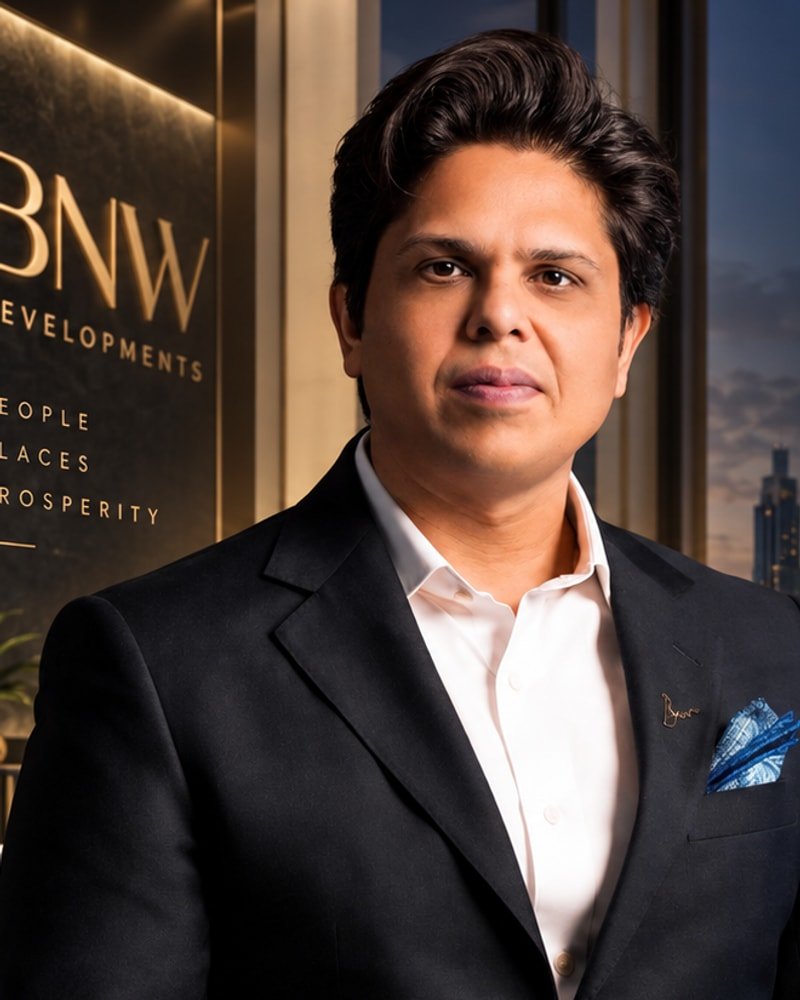 Dr. (CA) Ankur Aggarwal · BNW Developments
From chartered accountancy to creating one of the UAE’s fastest-scaling luxury development platforms, Dr. (CA) Ankur Aggarwal is combining financial discipline, branded residences and ambitious expansion to build BNW Developments for the next phase of Gulf real estate.
Choose an assistant to explore this page further.
Opens in a new tab. You can also copy the prompt into your assistant.